Is This The End of James Bond?
Why Popular Franchises Crash After 50?


James Bond Is Dead.
For the first time ever, James Bond died saving the world. No Time to Die (2021) marked the explosive conclusion to Daniel Craig’s tenure as 007. Bold? Yes. Different? Absolutely. Infuriating? For many fans, without a doubt—but that’s a discussion for another day.
Turns out, Craig’s Bond wasn’t the only thing to die in that explosion. The Broccoli era did, too.
From Dr. No to No Time to Die, the Bond franchise has been a family affair, managed mostly by the Broccolis, from Albert R. Broccoli to his daughter and stepson. It’s one of the few franchises not solely in the hands of "the corporation."
Until now.
While Skyfall (2012) was a triumphant celebration of 50 years of 007, what followed was, in this writer’s humble opinion, a downward spiral of nostalgia-fueled self-parody à la the Moore era. Spectre (2015) and No Time to Die fizzled out, culminating in Bond’s demise. And now, in 2025, the franchise finds itself in turmoil.
Since No Time to Die, fans have waited for news on the next Bond and the future of the series. What they didn’t expect? Barbara Broccoli and Michael G. Wilson, the shepherds of the franchise since GoldenEye (1995), selling their creative control—for a cool billion dollars—to the corporate overlords at Amazon.
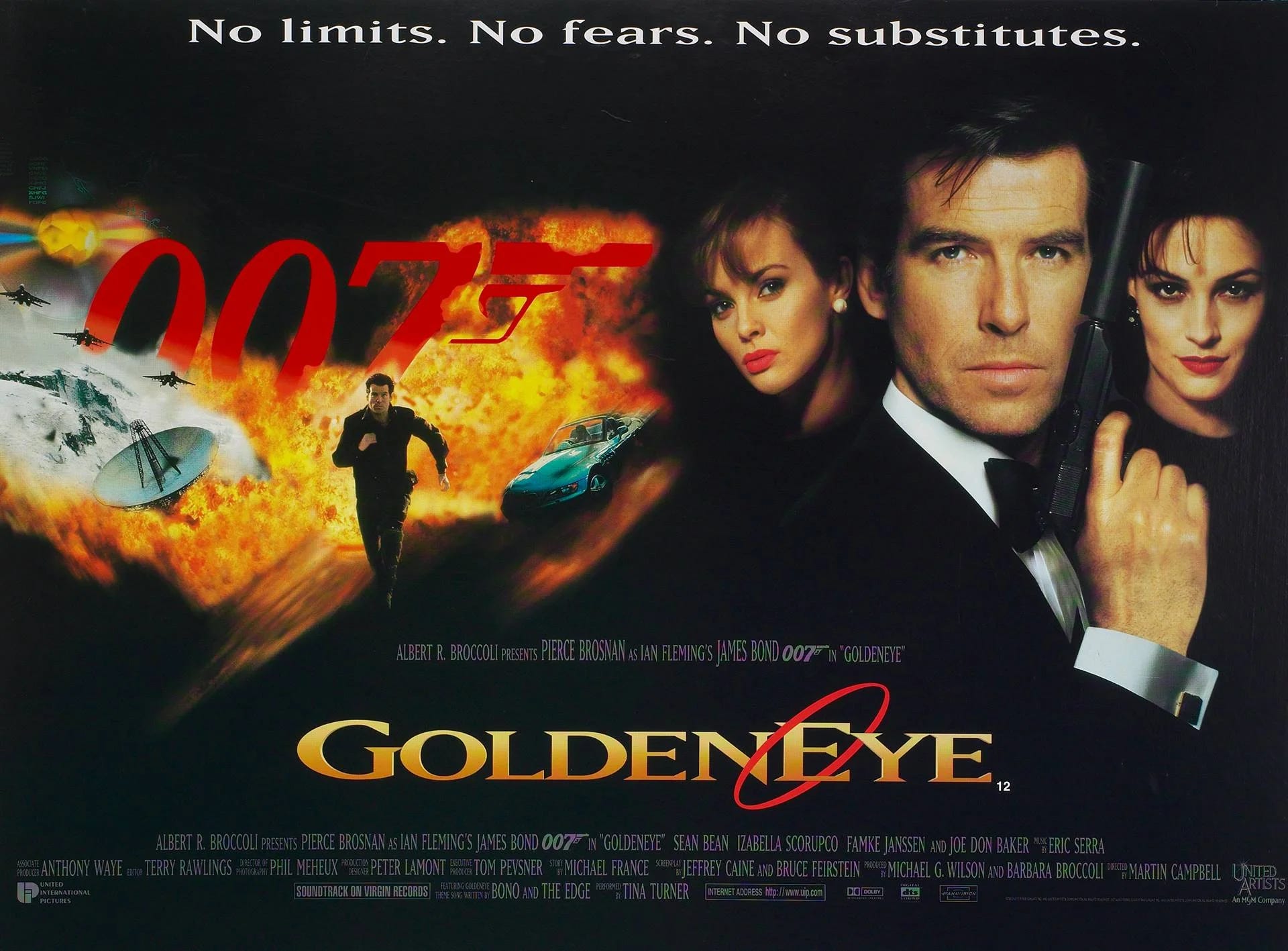
Like many others, when the news broke, I took to social media in disbelief. "It turns out Bond really did die in No Time to Die," I lamented. Just a year shy of Bond’s 60th anniversary, no one realized how symbolic that ending would be.
In the wake of Amazon seizing control, I started thinking about franchises in general, and there seems to be a trend—when they hit or near their 50th anniversary, something goes wrong. A mixture of corporate BS, fatigue, and creative bankruptcy.
And Bond is just the next casualty of the fifty-year curse.
Another Franchise Falls
Three massive franchises—Star Trek, Star Wars, and Doctor Who—have all stumbled in recent years. And now, Bond joins them.
Each of these franchises peaked around their 50th anniversaries before spiraling into mediocrity. Star Wars barely made it to forty before Disney drove it off a cliff in 2017 with The Last Jedi.
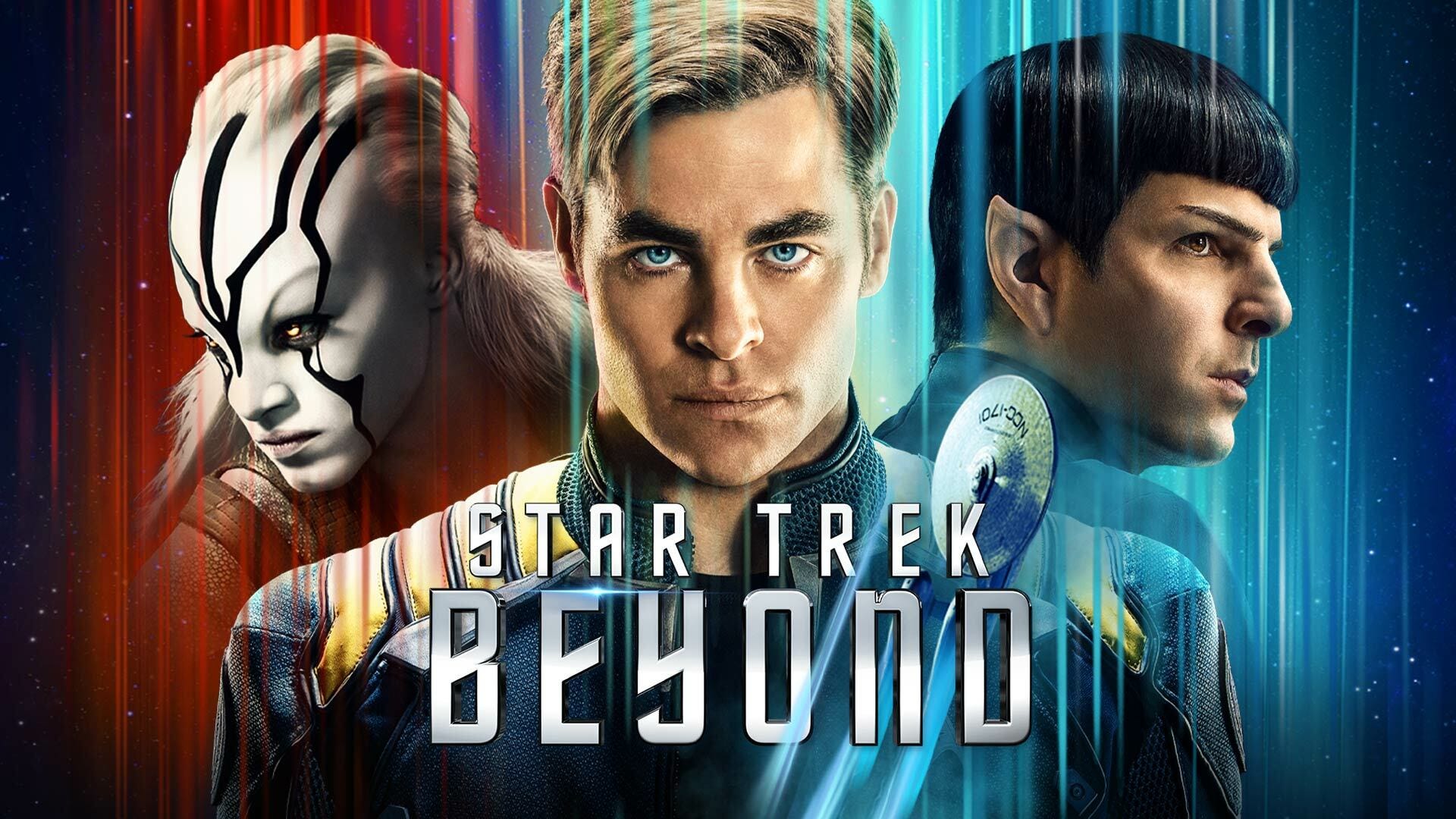
Star Trek has been stumbling ever since Star Trek Beyond (2016). The franchise’s big 50th anniversary was fraught with production issues—rushed script, director troubles, and a mandated release date. Beyond, while decent, didn’t wow audiences and underperformed at the box office. As a result, Star Trek hasn’t returned to the big screen since.
Its small-screen output hasn’t been spellbinding either. From Discovery to Picard (seasons 1 and 2), audiences have generally been unhappy with where Trek has gone. Neither show has a favorable audience rating on Rotten Tomatoes. Even Star Trek: Section 31 (2025), the franchise’s first “film” since its 50th, flopped spectacularly—uniting critics and audiences in disappointment for the first time in Trek’s modern era.
The franchise that most closely followed Bond’s trajectory was Doctor Who. Its 50th-anniversary special, The Day of the Doctor, like Skyfall, was a high point—culminating in a not-perfect but perfectly entertaining adventure that ended with a hopeful feeling for the future of the series.
Unfortunately, since Doctor Who’s 50th, the show has hemorrhaged viewers. It pushed hard on retcons, lazy storytelling, and member berries, and it lost touch with what made it special. It’s now a shadow of itself.
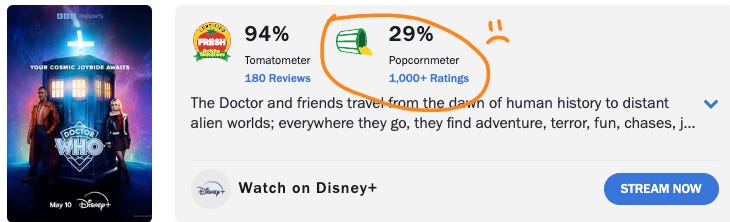
Bond felt the same, post Skyfall.
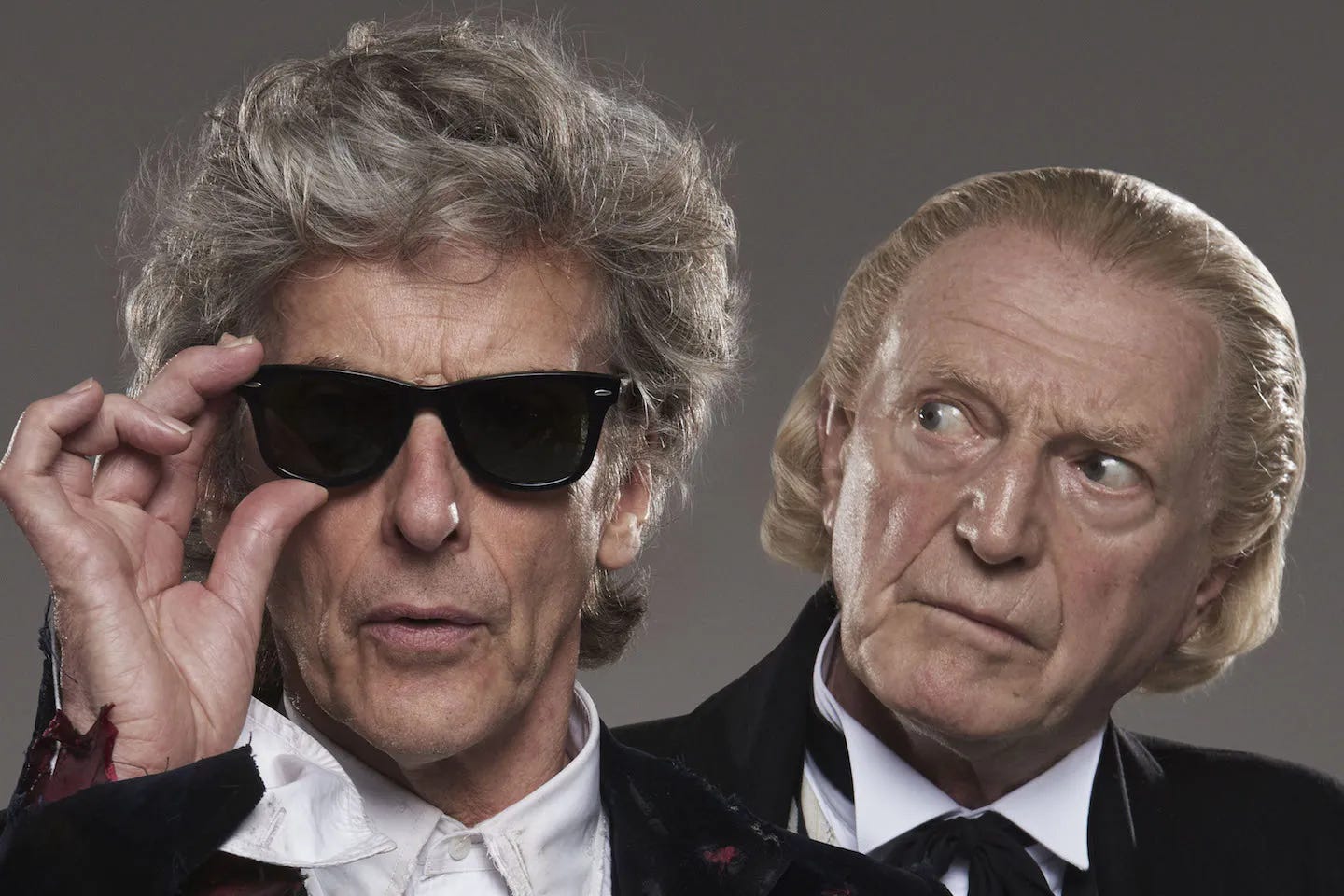
There usually comes a nice, neat endpoint for a franchise—a moment when those in control should take stock and reevaluate. For Doctor Who, that moment was Peter Capaldi’s finale in Twice Upon a Time. It was the perfect opportunity to bring the franchise full circle, then pause the show, regroup, and restart fresh in five years or so with a reboot.
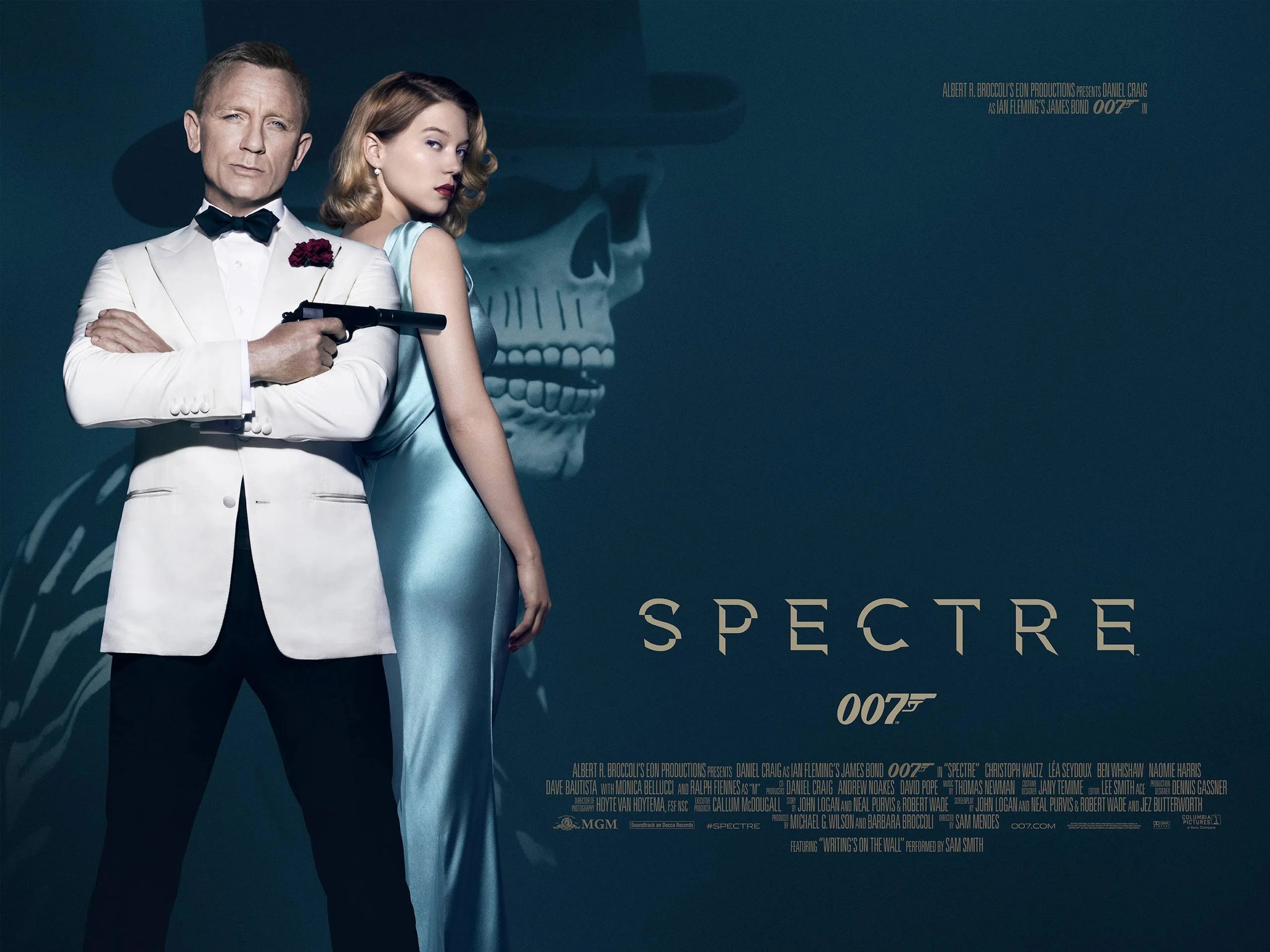
For Bond, that was Spectre. An average at best, but a decent enough send off for Craig’s Bond, that, for better or worse, tied up his entire era.
Instead of these franchises taking a step back and recalibrating, there is a “more more more” mentality. What’s not been understood is that this weakens a franchise’s freshness and relevance.
And Bond? He’s on the same tragic path.
The Amazon Problem
In the last ten years, Disney has flooded the market with twelve Star Wars films, seven live-action TV shows, and six animated series. Paramount did the same with Star Trek, pumping out two prequel series, two cartoons, and a legacy series that no one liked until season 3 (Star Trek: Picard). In a desperate attempt to catch up to Marvel and Star Wars, for Doctor Who’s (very tired) 60th anniversary, the BBC created the "Whoniverse" to pave the way for upcoming franchise spin-offs. Yay? In addition, the BBC handed a piece of Doctor Who over to Disney, giving the creatively bankrupt behemoth "creative input."
Has the glut of films and TV shows made any of these franchises better?
Nope.
Since Amazon acquired MGM, its lustful eyes have been on Bond like Gollum’s on the Ring of Power. However, Barbara Broccoli and Michael G. Wilson refused to dilute 007 with endless spin-offs. Even when the Craig era wobbled post-Skyfall, Bond at least continued to feel special. There was always excitement for the next adventure—not nothing, like I feel today for so many franchises! I might not have liked Spectre, but I sure was pumped to see it. Same with No Time to Die.
Now that’s over.
Since the MGM/Amazon deal, Amazon has been thirsty for Bond content—something Broccoli was not willing to give them. And rightfully so. Why? Because, in my opinion, the future of Bond was precious to Barbara. According to The Hollywood Reporter, Amazon pitched spin-offs for Moneypenny, Felix Leiter, and, of course, a female 007. Unsurprisingly, Broccoli and Wilson rejected these ideas. Their focus was always the films—rightfully so. The Star Wars/Marvel churn drains franchises of momentum and appeal.
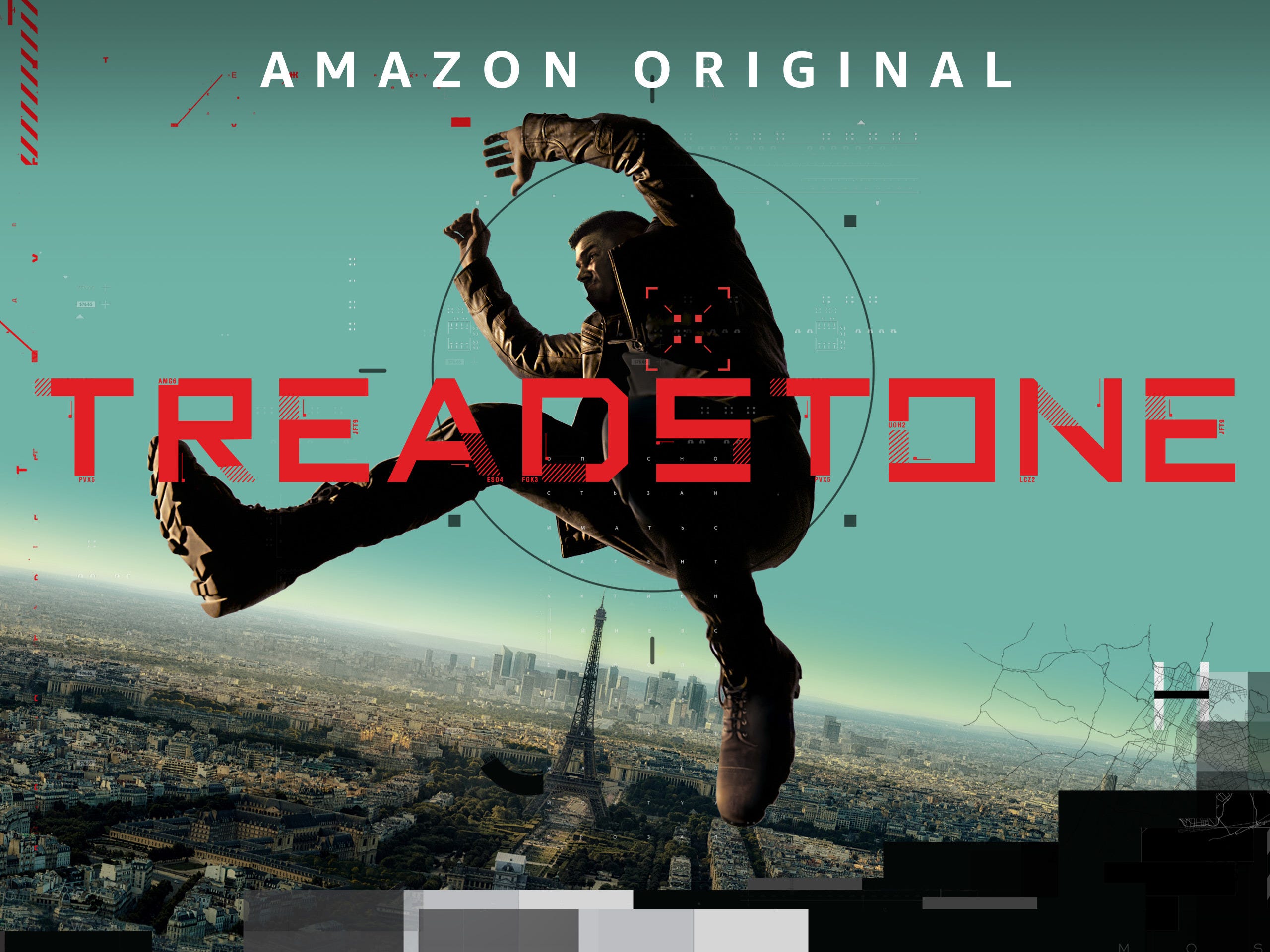
But you can also look at Amazon’s track record. They already attempted an expanded universe with another popular spy franchise through the show Treadstone (2019), a Jason Bourne prequel series. That landed like a wet fart. No one wanted Bourne without Bourne. Broccoli knows fans don’t want Bond without Bond.
So it’s no wonder Broccoli reportedly called Amazon executives “fucking idiots.”
In the age of streaming, most studios just want to push out content. So it comes as no surprise that after Broccoli’s unwillingness to pump out ‘content’—for which I have much respect—and her criticism of Amazon executives, Amazon CEO Jeff Bezos allegedly said, “I don’t care what it costs, get rid of her.”
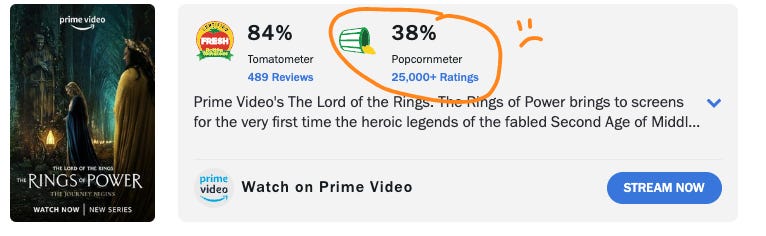
Aspiring for content is how you wind up with Treadstone and The Rings of Power. It is a soulless exercise in driving traffic to a platform.
Don’t get me wrong, Amazon has many successful shows. Bosch and Bosch: Legacy are among my favorites, as are The Boys, Ripper Street, The Expanse, The Marvelous Mrs. Maisel, and Jack Ryan. It’s not impossible for Amazon to make quality entertainment, but when it comes to handling major franchises? Their track record is abysmal. Again, I point you to Treadstone and The Rings of Power.
The most disappointing thing with Broccoli and Wilson’s departure, 007 is now at the mercy of corporate decision-making. Much like my interest in new Doctor Who and Star Trek series died, I now feel Bond may be the next beloved thing to go. I fully expect a Moneypenny spin-off, an M prequel, and whatever uninspired content the algorithm spits out next. It’s already happening with Bond books, so of course it’ll happen on the small screen. And none of it interests me.
The Future of Bond—Or Lack Thereof
That said, the sad truth is that the Bond franchise was exhausted even before the Amazon takeover. Craig’s Bond had drifted into Moonraker-era self-parody, desperately in need of fresh energy. But that’s typical of Bond. Connery’s era waned, just as Moore’s and Brosnan’s did by their end. And Craig was there.
I think Broccoli and Wilson knew this to some extent, which is why they were taking so long to decide what to do next with Bond, in addition to dealing with Amazon dickheads. Yes, Craig overstayed his welcome by two films, as Broccoli and Wilson grossly overestimated his importance to the franchise and character. He was an excellent Bond, but we needed a new Bond post-Skyfall. Instead, we got more of the same—bloated, overly familiar films with silly villains that put more emphasis on the gluttony of Bond references than on character.

However, I believe Broccoli and Wilson could have given the world one more great Bond film. I’m sad we won’t see that. Yes, I know they are responsible for No Time to Die and Die Another Day, but they have plenty of hits to prove their worth, for goodness’ sake! What could have been Bond’s and Broccoli and Wilson’s saving grace was loosening their grip when directors like Christopher Nolan and Danny Boyle were circling the director’s chair—or accepting Spectre as Craig’s finale.
The Broccoli era would have ended eventually, but it didn’t have to end like this—not on the weak note of No Time to Die. But maybe the death of Bond is exactly how it should end? Maybe Bond is dead and it’s time to move on? Looking at today’s bloated, tired franchises still limping along beyond or near their 50th—Star Trek, Doctor Who, Star Wars—it’s painful to add Bond to that list, mainly because it didn’t have to be this way.
Lee Child might think Amazon is the answer to reviving Bond, but is the algorithm-driven breath of Amazon the solution? I’m not sold. I always wanted Bond to live to die another day, but I think we’re past that. But if and when the deluge of Bond spin-offs and prequels happen, I’ll remember what Barbara Broccoli (reportedly) said: fucking idiots.